Introduction – Social Media
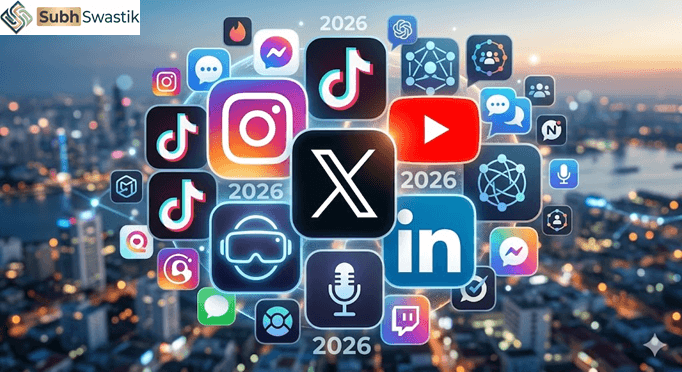
What is the first thing you check in the morning? For most of us, it’s social media. In 2026, social media is much more than a place to connect with friends; it is a vital part of our daily lives, our careers, and the global economy. With an estimated 5.66 billion people using social platforms worldwide—about 69% of the global population—its influence is undeniable .
For students, it’s a source of both entertainment and academic collaboration. For professionals, it is a platform for personal branding and career growth. For businesses, it’s an essential channel for marketing, customer service, and sales. This guide will walk you through the essentials of social media in 2026, covering everything from the fundamental definitions to advanced strategies.

What is Social Media? A Simple Definition
At its core, social media refers to digital platforms and applications that allow users to create, share, and interact with content and communities online . Unlike traditional media like TV or radio, which are one-way communication, social media is interactive.
Here’s what you can do on social media:
- Share photos, videos, and updates
- Connect with friends, family, and colleagues
- Learn new information and follow news
- Promote businesses and build personal brands
In essence, social media has transformed how we, as individuals and organizations, communicate in the digital era.
Also Read : Top Strategies to Maximize ROI Using WhatsApp Marketing Service in 2026
The Five Main Types of Social Media Platforms
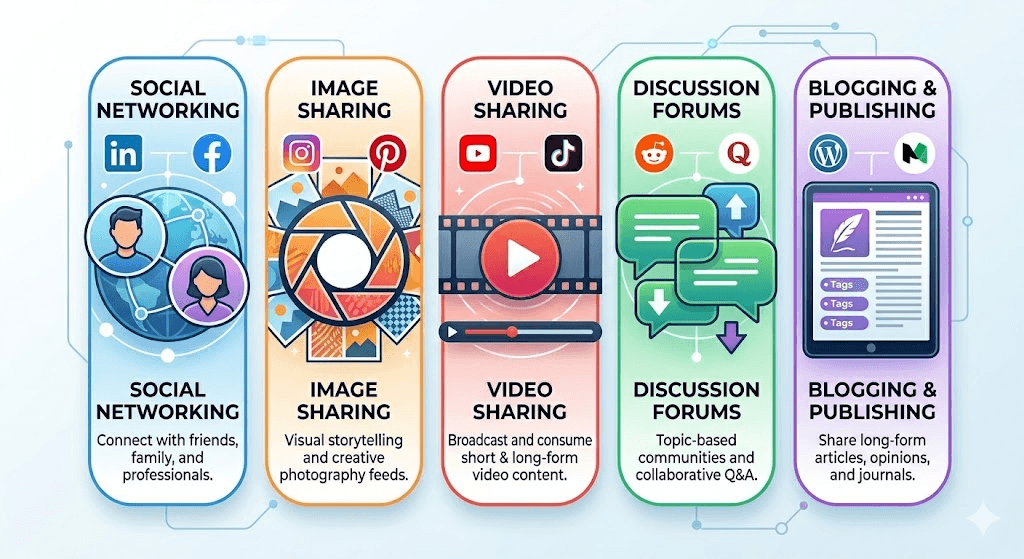
Not all social media platforms are the same. They serve different purposes and attract different audiences. Understanding the five main types is the first step to using social media effectively .
| Type | Primary Purpose | Examples | Best For |
|---|---|---|---|
| Social Networking | Building connections and communities | Facebook, LinkedIn, X (formerly Twitter) | Community building, professional networking |
| Media/Video Sharing | Sharing visual content like photos and videos | Instagram, TikTok, YouTube, Snapchat | Brand storytelling, high engagement |
| Microblogging | Sharing short, real-time updates and news | X (Twitter), Threads | News, public discussions, quick updates |
| Discussion Forums | Deep-dive conversations and knowledge sharing | Reddit, Quora, Discord | Thought leadership, market research |
| Blogging/Publishing | In-depth written content | Medium, WordPress | Establishing authority, thought leadership |
Social Networking Platforms
These are the digital “town squares” where people connect and converse. Think of Facebook, which has over 3 billion monthly active users, and LinkedIn, which is essential for professionals . These platforms are versatile, allowing you to post text, photos, videos, and polls. They are ideal for building and nurturing communities.
Also Read :SEO AEO GEO SXO Explained: The Evolution of Search Optimization in 2026 and Beyond
Image and Video Sharing Platforms
In our fast-paced world, visual content dominates. Platforms like Instagram (2 billion users) and TikTok (nearly 2 billion) are built around this. They are perfect for telling your brand’s story in an engaging way using high-quality photos, short-form videos, or live streams .
Discussion and Community Forums
Platforms like Reddit and Quora are where people go for honest opinions and in-depth knowledge. With over 900 million monthly active users, Reddit’s subreddits cover every topic imaginable . For businesses, these platforms offer a goldmine of unfiltered customer feedback.
Why is Social Media Important for Students?
For students, social media is a double-edged sword. It offers incredible benefits but comes with challenges, especially regarding study habits.
Benefits for Students
Research shows that students have adapted social media to meet academic needs . The key benefits include:
- Improved Communication: Easily connect with classmates and professors about assignments .
- Access to Resources: Share and receive learning materials like slides and notes quickly .
- Collaborative Learning: Form groups on platforms like WhatsApp for group projects and study sessions .
- Inter-university Collaboration: It can even serve as a platform for students to collaborate with peers from other universities .
Also Read :Digital Marketing Services: Boost Your Business Growth with Expert Strategies
Drawbacks for Students
The same research highlights serious challenges :
- Addiction and Distraction: Spending too much time on social media can eat into your study time. Some students even admit to checking social media during lecture hours .
- Loss of Productivity: Constant alerts and notifications make it difficult to concentrate on academic tasks.
- Sleep Deprivation: Staying up late to scroll through feeds affects sleep and overall well-being.
💡 Student Tip: To balance social media and studies, consider tactics like:
- Using “Do Not Disturb” modes during study sessions.
- Setting specific times for social media checks.
- Following educational accounts that share academic content.
Social Media Management: The 2026 Strategy
In 2026, a successful social media strategy is no longer about just having a profile. It’s about an integrated approach that supports the entire customer journey: from making people aware of your brand to building loyalty after they’ve bought something . The days of treating social media as a separate “silo” are over.
Key Elements of a 2026 Strategy
- Paid + Organic + Owned: An effective strategy is a mix of paid ads (for reach), organic content (for credibility), and owned channels like your email list (for long-term relationships) .
- Algorithm-Savvy Organic Content: Since organic reach has declined, focus on creating highly engaging content that the platform’s algorithm favors . Prioritize engagement rate (comments, shares) over posting volume.
- Smarter Paid Ads: The social landscape is “pay-to-play,” so you need to pay smarter. Use precise targeting, create campaigns for every stage of the funnel, and invest in creative, emotion-driven visuals and copy .
- Navigating AI and Influencers:
- AI Influencers: In 2025, mentions of AI influencers rose by 50%. While attractive for brands due to their “always-on” nature, they come with risks. A significant 37% of consumers say they would not trust a brand that relies on an AI influencer .
- Real Influencers: The most effective partnerships today come from micro-influencers and niche community leaders, not just celebrities. Their authenticity and peer-credibility drive more trust and conversions .
Ten Essential Skills for a Great Social Media Manager
The role of a Social Media Manager has become more complex, especially with the rise of AI. To be successful, you’ll need to be a blend of a writer, researcher, analyst, and designer .
- Writing: You will write everything from catchy headlines to engaging video scripts, each tailored to the tone of a specific platform .
- Research: You must constantly stay on top of platform algorithm changes, competitor moves, and trending topics .
- Artificial Intelligence (AI) Skills: Knowing how to use AI tools for personalisation, content generation, and advertising is now a must-have skill .
- Customer Service: Consumers expect brands to reply to queries and complaints on social media. A quick response can turn a complaint into a loyal customer .
- Search Engine Optimization (SEO) Knowledge: SEO is crucial to get your social content found. Use keywords in captions and bios, and create linkable content .
- Creativity & Design: A great post isn’t just well-written; it’s visually engaging. Social media managers need an eye for design .
- Data Analysis: You must track KPIs and turn data into actionable insights.
- Strategy: You need to see the big picture and align social media activities with larger business goals.
- Adaptability: The digital world changes fast. You must be comfortable with change and ready to pivot.
- Community Management: Building and nurturing a community is about more than just posting; it’s about engaging authentically with followers.
Social Media Icons, Calendars, and Templates
To stay consistent and organized, social media managers and individuals must master two key elements: building a visual brand and planning content.
Social Media Icons and Branding
Social media icons are more than just a set of symbols. They are a crucial part of your brand identity. Having a consistent set of icons on your website, emails, and social profiles provides a seamless experience for your audience.
Tips for Using Social Media Icons:
- Use Official Icons: Always use the official icons of a platform (e.g., X, Instagram, LinkedIn) to maintain brand trust. “Get Free” or outdated icons can look unprofessional.
- Consistency is Key: Keep the style of your icons (color, shape, size) consistent with your brand’s design language.
- Strategic Placement: Place them in visible and high-traffic areas, like your website header, footer, or contact page, to encourage follows.
Social Media Calendar: Your Secret Weapon
A social media calendar is a strategic plan of all your upcoming content, organized by publish date and platform . It’s the secret weapon for staying consistent and strategic.
Why You Need a Calendar:
- Consistency: It ensures you’re posting regularly, which is crucial for staying top-of-mind.
- Strategy, Not Chaos: It helps you plan a balanced mix of content (educational, entertaining, promotional) aligned with your goals.
- Team Collaboration: It allows your team to see what’s coming up, track progress, and work together seamlessly .
How to Build a Social Media Calendar
- Define Your Goals: What do you want to achieve with your social media? (e.g., build a personal brand, get a job, sell a product). This will guide your content .
- Plan Your Content Mix: Choose the types of content you’ll publish (videos, text posts, images). A balanced mix keeps your feed interesting .
- Choose a Format: A simple spreadsheet is a good start, but a project management tool like Asana or Hootsuite is much more powerful for collaboration .
- Get a Free Template: Instead of starting from zero, use a free social media calendar template. Platforms like Hootsuite and Asana offer pre-built templates to help you organize posts, track status, and share with your team .
Social Media Career Landscape: Opportunities and Jobs
Social media is a booming career field. For students and professionals, it offers a wide range of dynamic opportunities.
- Social Media Manager Job Growth: This is a fast-growing field. Research suggests the Social Media Manager job growth rate is about 10% from 2018 to 2028, which could mean up to 33,700 new jobs .
- What’s the Job Like? A Social Media Manager is the ‘voice of the company’ . The role is highly dynamic and hands-on. You’re not just building decks; you’re creating and publishing content, spotting and reacting to trends in real-time, and building communities .
- Salary Expectations: The salary is competitive. In the U.S., Social Media Managers can earn between $59,000 and $81,000, depending on experience. In the U.K., the average is between £28,000 and £41,000 .
Key Career Advice for Aspiring Social Media Managers
If you’re aiming for a career in social media management, here are some essential tips to stand out in 2026.
| Skill Area | What It Means in Action | Why It’s Important |
|---|---|---|
| Be a Creator, Not Just a Planner | Gain hands-on experience creating content: writing, shooting video, or designing graphics . | Companies look for candidates who can do, not just manage. |
| Have a Strong Portfolio | Don’t just list your skills—show them. Create a portfolio of your best work . | It’s the most powerful way to demonstrate your abilities. |
| Master the Platforms | Know the algorithm, formats, and trends for Instagram, TikTok, LinkedIn, and more . | You can’t be effective if you don’t understand the tools of the trade. |
| Be Data-Driven | Use analytics to track what’s working and prove the ROI of your efforts . | Hiring managers want to know you can measure success and justify budget. |
Conclusion
Social media in 2026 is a dynamic, complex, and essential part of modern life. Whether you are a student aiming to be an influencer, a professional looking to grow your personal brand, or someone just trying to keep up with friends and family, understanding the different types of platforms and the strategies that make them work is key.
From mastering a social media calendar to understanding the nuanced role of social media icons in brand building, every element plays a part. While the job of a social media manager is more demanding than ever, it also offers incredible opportunities for creative, data-driven, and ambitious individuals. The brands that will thrive are not the ones chasing trends, but the ones that build genuine communities and tell stories that matter.
FAQ Section
Q1: What is the most popular social media platform in 2026?
A1: Currently, Facebook remains the most popular overall with over 3 billion monthly active users, followed closely by YouTube (2.58 billion) and Instagram (2 billion) . However, for younger demographics, TikTok and Instagram are often the preferred platforms.
Q2: What are the advantages and disadvantages of social media for students?
A2: Advantages include better communication with peers and teachers, easier access to study resources, and improved collaboration on projects . Disadvantages include the potential for addiction, loss of productivity, and being a major source of distraction during study time .
Q3: What is a social media calendar, and why do I need one?
A3: A social media calendar is a schedule that maps out exactly what you will post on each platform and when . You need one because it helps you stay organized, consistent, and strategic, ensuring you’re not just posting randomly but are aligned with your goals .
Q4: How has AI changed social media marketing?
A4: AI is now central to social media, powering everything from the algorithms that determine what you see, to tools that help brands generate content, manage customer service, and optimize ad campaigns . Marketers must now be skilled at using and working alongside AI tools.
Q5: How do I become a social media manager?
A5: Start by gaining practical experience. This could mean running social media for a student club, a small business, or even your own personal brand. Focus on developing a diverse skill set, including writing, design, data analysis, and AI knowledge. Build a strong portfolio that showcases your work .


Leave a Reply